When Should You Commission A Bespoke Executive Desk Instead Of Buying Standard?
A custom desk from a workshop is a different purchase from a configured catalog model. Here is how to tell which one your office, your body, and your patience actually call for.

Configured is not the same as bespoke
Most luxury desk makers offer configuration: you choose the top species, the size from a fixed range, the frame color, and perhaps a drawer module. That is a well-engineered product with options, and it arrives on a predictable schedule. A bespoke commission starts from your requirements and drawings instead. The maker may source a specific slab, alter the proportions, integrate a particular lift mechanism, build a matching credenza, or design around an unusual room. The two paths overlap in price at the top of the configured range, but the experience and the risk are very different. Related: What Makes An Executive Sit Stand Desk Worth A Premium Investment?
Configured desks win on certainty. The lift system has been tested with that top, the warranty is clean, and the delivery date is real. Bespoke wins on fit. If a standard top is a few inches too short for the alcove, if you want a live edge that faces the room in a particular way, or if you need a lift mechanism hidden inside a traditional pedestal form, only a commission gets you there. Deciding between them is mostly a matter of being honest about which of those you value more.
Keep reading: What Makes An Executive Sit Stand Desk Worth A Premium Investment?, How Do You Choose The Right Size And Height Range For A Standing Desk?, Which Materials And Finishes Elevate A Luxury Executive Desk Above The Rest?. See how Ergonestr helps you a curated guide to the finest sit-stand and executive desks.
The situations that genuinely call for a commission
Architecture is the first. Historic offices with paneled walls, rooms with odd angles, or executive suites where the desk must align with built-in millwork often defeat standard sizes. A workshop can match a wood species and finish to existing joinery, which no catalog product will do. The second is the body. A very tall or very short executive, or one who works from a wheelchair, may need a height range or a knee clearance that standard frames do not offer, and a commission can pair an unusual frame with a top designed around it. Related: How Do You Choose The Right Size And Height Range For A Standing Desk?
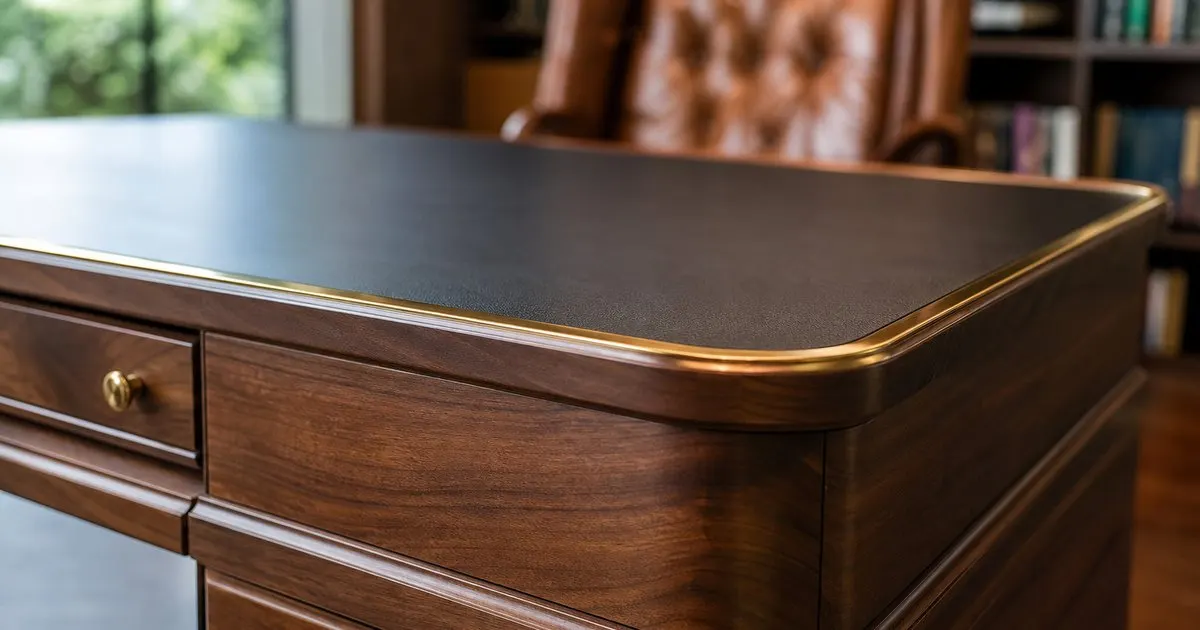
The third is the brief itself. Some executives want a sit-stand desk that does not look like one: a mechanism concealed in a period-style form, a leather inlay writing surface, or a desk that pairs with an heirloom chair. Others need integration that catalog makers do not attempt, such as concealed monitor lifts, built-in document storage with specific dimensions, or particular power and data routing for a trading setup. When the list of requirements runs longer than the list of catalog options, that is usually the signal. Related: Which Materials And Finishes Elevate A Luxury Executive Desk Above The Rest?
What a commission actually costs you beyond money
Time is the first cost. A workshop of real quality is booked out, and a commission typically moves through consultation, drawings, approval, material sourcing, building, finishing, and delivery over several months rather than weeks. Attention is the second. You will be asked to approve drawings, choose between samples, and answer questions about how you sit, what you place on the desk, and where the light comes from. If you would rather not have those conversations, a configured desk will suit you better. Related: What Should You Know About Motor Quality In A High End Sit Stand Desk?
Risk is the third. A one-off desk has no track record, so the lift mechanism, the top, and the joinery have never been tested together before yours. Good workshops manage this by using proven frames and building prototypes for unusual elements, but you should ask how they handle a mechanism failure a year in, and whether the frame supplier's warranty passes through to you. Deposits are usually substantial and non-refundable once materials are ordered, so the contract should specify what happens if the finished piece differs from the approved drawings.
How to brief a workshop well
Bring measurements of the room, the path in, and yourself: elbow height seated and standing, and the monitor arrangement you use. Bring photographs of the space at different times of day, since finish color reads differently in morning and afternoon light. Bring a short written list ranked by importance, so the maker knows whether the lift range or the matching veneer is the point you will not compromise on. Ask to see finished work in person if at all possible, and ask for references from clients whose desks are several years old.
Agree the mechanism early. Most workshops do not build lift columns themselves; they buy them from specialist suppliers and design around them. Ask which system they intend to use, why, and whether it can be serviced locally. Agree, too, on the finish schedule and on who maintains it. A hand-rubbed oil finish on a bespoke top is beautiful and repairable, but it asks something of the owner, and a workshop should tell you that plainly. In our view, a commission is worth it when the requirements are real, and a well-configured catalog desk is the wiser purchase when they are not.
- Configured desks offer tested mechanisms and clean warranties; bespoke offers fit that no catalog can match.
- Architecture, unusual body dimensions, and long requirement lists are the genuine reasons to commission.
- Expect months rather than weeks, substantial deposits, and a contract that defines acceptance against drawings.
- Settle the lift mechanism and finish schedule with the workshop before any material is ordered.

Julien Jimenez
Julien Jimenez is an independent software builder based in Paris. He designs, ships, and operates focused SaaS products for small businesses and independent professionals. Read the full author page.
A Desk Worthy of the Work
A curated guide to the finest sit-stand and executive desks. Ergonestr is built to help you put this into practice.
Find your deskMore from the Ergonestr blog

What Makes An Executive Sit Stand Desk Worth A Premium Investment?

How Do You Choose The Right Size And Height Range For A Standing Desk?
Which Materials And Finishes Elevate A Luxury Executive Desk Above The Rest?
Get the complete luxury sit-stand and executive desks guide
Our full buying guide, the price guide, and new research as we publish it. One email, no spam, unsubscribe any time.