Which Desk Shape Suits An Executive Who Holds Meetings At The Desk?
If you receive people at your desk, its shape governs where they sit, how the conversation feels, and whether the sit-stand function still works. A guide to rectangular, curved, L-shaped, and peninsula forms.

Decide who sits where before you choose a shape
The first question is not aesthetic. It is whether visitors sit across from you, beside you, or at a separate table. A desk that hosts people across its front edge needs a deep top, a clean front face with no visible mechanism or cable spine, and enough overhang on the visitor side for knees. A desk that hosts people beside you, as many collaborative executives prefer, needs width along one edge and a chair space that does not fight the column. If meetings of more than two people happen at a separate table, the desk can be shaped purely for your own work.
Count the people and the frequency honestly. An executive who sees one visitor at a time a few times a day can use almost any shape with a good guest chair. One who regularly hosts three or four, or who reviews documents with people leaning over the surface, will find a straight rectangle awkward and may be better served by a shape that creates a second zone. Getting this wrong is expensive, because the desk shape drives the size, the frame, and the room layout all at once. Related: Which Materials And Finishes Elevate A Luxury Executive Desk Above The Rest?
Keep reading: What Makes An Executive Sit Stand Desk Worth A Premium Investment?, How Do You Choose The Right Size And Height Range For A Standing Desk?, Which Materials And Finishes Elevate A Luxury Executive Desk Above The Rest?. See how Ergonestr helps you a curated guide to the finest sit-stand and executive desks.
Rectangular and curved fronts
A large rectangle is the classic executive form for good reason: it presents a formal face to the room, seats two visitors comfortably across a deep top, and works cleanly with a sit-stand frame because the load is symmetrical. Its weakness is that a rectangle at standing height creates a visible barrier between you and a seated guest, so executives who stand for part of their meetings often lower the desk when someone sits down. A shallow modesty panel that rises with the top hides the frame from visitors and keeps the formal look. Related: What Makes An Executive Sit Stand Desk Worth A Premium Investment?
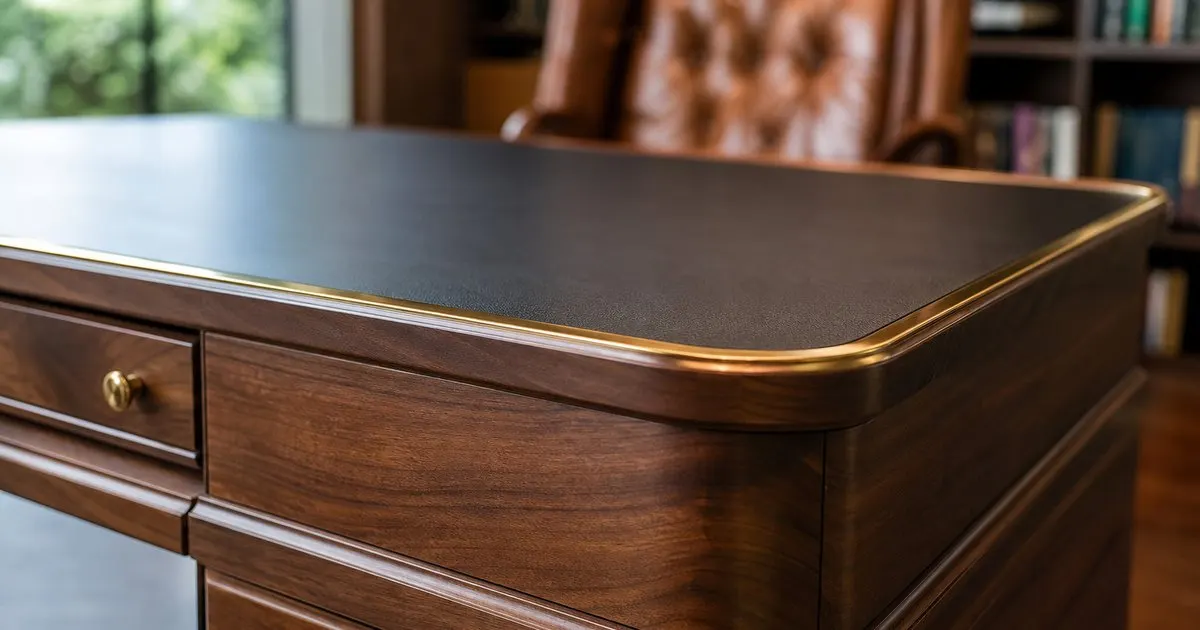
A curved or bowed front, deeper at the center than at the ends, softens that barrier and invites guests closer at the sides while keeping your working zone deep. It is a favored form in luxury work because it shows off a wide slab or a bookmatched veneer. The considerations are practical: a curved top must be fixed to a straight frame with careful bracketing, and its overhang at the ends can encourage wobble if the frame feet are short. Ask the maker whether the frame was designed for that top or adapted to it.
L-shaped, peninsula, and dual-surface forms
An L-shaped desk gives you a working return for screens and a clean primary surface for people. The trouble is the lift: raising both surfaces together requires either a corner frame with three columns or two frames synchronized, and both are more complex to keep level and more likely to develop uneven travel. Many luxury makers solve this by lifting only the primary surface and leaving the return fixed at seated height, which is often the right compromise when the return holds a printer or reference material rather than a keyboard. Related: How Do You Choose The Right Size And Height Range For A Standing Desk?
A peninsula desk extends a rounded or squared end into the room, so that two or three visitors can sit around it as a small table while you remain at the working end. It is the most meeting-friendly form and the most demanding of floor space. Dual-surface desks, where a fixed conference-height surface sits beside a separate sit-stand surface, deliver the same effect in a more compact footprint and keep the mechanism away from the guest zone entirely. Both need a room that lets people approach the desk from more than one direction. Related: What Should You Know About Motor Quality In A High End Sit Stand Desk?
Matching the shape to the frame and the room
Whatever the shape, keep the sit-stand frame's columns as close as possible to the load. A deep visitor overhang or a long peninsula that extends far beyond the column line stresses the frame and rocks at height. Ask the maker for the maximum overhang they recommend per side and where the balance point of the top sits. The larger the top, the more it matters that the frame was engineered for it rather than pulled from a standard range. Anti-collision sensitivity also matters more when guests sit with knees under a rising desk.
Then look at the room. The desk should be visible from the door but not facing it directly, with visitor chairs that can be reached without squeezing past the columns. Leave a comfortable path behind the chairs, and remember that standing height changes sightlines to windows and artwork. In our view, the best meeting desks in luxury offices are curved fronts and dual-surface forms; L-shapes suit executives who work alone at screens most of the day and meet elsewhere. This guide may earn a commission on some purchases, which does not change that view.
- Choose the shape by where visitors sit and how many arrive, not by the catalog photograph.
- Rectangles are formal and lift cleanly; curved fronts soften the barrier and flatter fine timber.
- L-shapes complicate lifting; peninsulas and dual-surface desks host meetings best but need floor space.
- Keep columns close to the load and check overhang limits so the desk stays steady at height.

Julien Jimenez
Julien Jimenez is an independent software builder based in Paris. He designs, ships, and operates focused SaaS products for small businesses and independent professionals. Read the full author page.
A Desk Worthy of the Work
A curated guide to the finest sit-stand and executive desks. Ergonestr is built to help you put this into practice.
Find your deskMore from the Ergonestr blog

What Makes An Executive Sit Stand Desk Worth A Premium Investment?

How Do You Choose The Right Size And Height Range For A Standing Desk?
Which Materials And Finishes Elevate A Luxury Executive Desk Above The Rest?
Get the complete luxury sit-stand and executive desks guide
Our full buying guide, the price guide, and new research as we publish it. One email, no spam, unsubscribe any time.